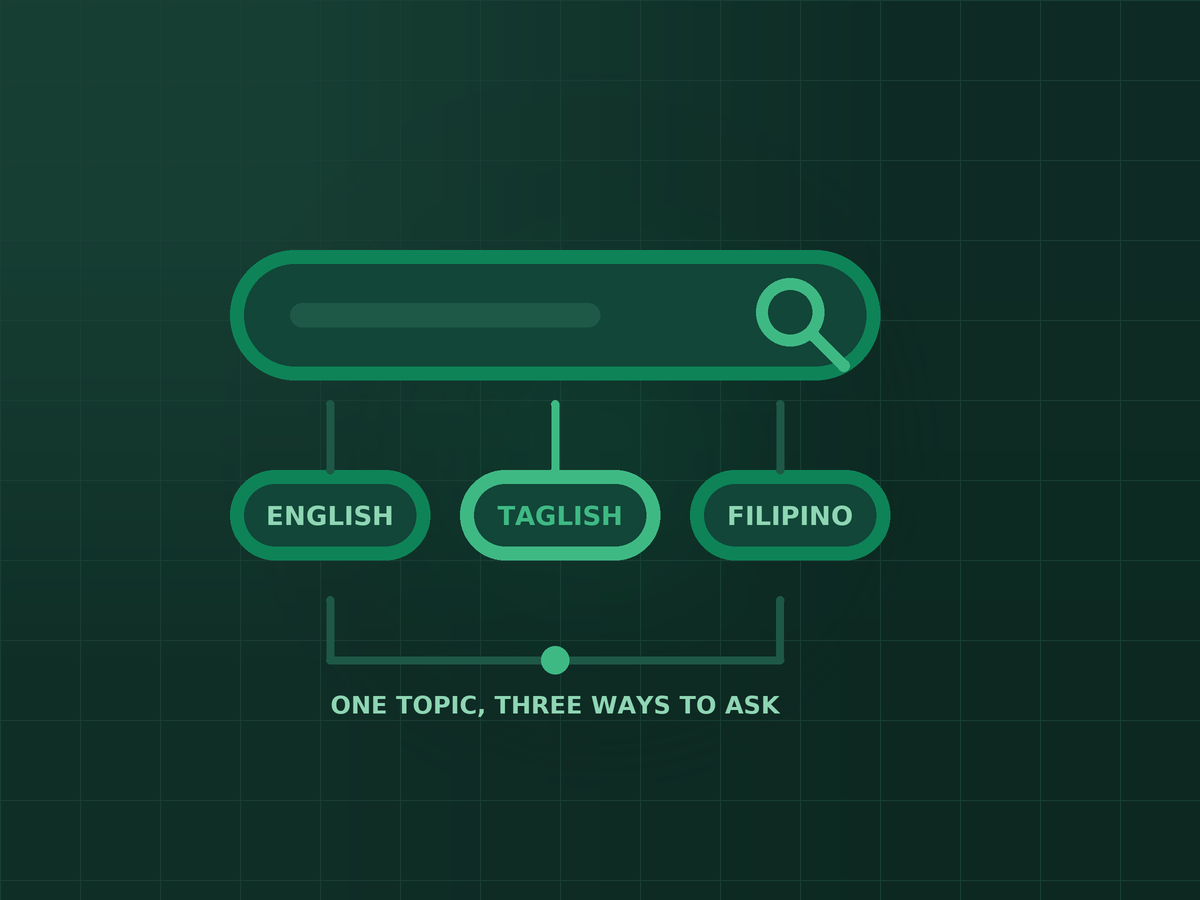
Short answer: Philippine searchers describe the same need in English, in Filipino and in Taglish, so good keyword research collects all three phrasings, groups them by what the searcher actually wants, and maps each group to one page — instead of chasing whichever English phrase shows the biggest number in a tool.
Most keyword research advice is written for markets where people search in a single language. That is not how a lot of Filipinos search, and it is why a keyword list copied from a generic tool often feels slightly off for a local business.
This is the process I use to build a keyword list for a Philippine business, and the mistakes it is meant to prevent.
Why Philippine keyword research is different
A customer who wants a website might type an English phrase, a Filipino question, or a mix of both in the same query. All three describe the same need, but they look like completely different keywords in a spreadsheet.
Two things follow from that. First, a tool can show little or no search volume for a phrase that real people do type, because mixed-language and long-tail queries are exactly where keyword tools have the thinnest data. Second, a list built only from English terms quietly ignores part of your audience.
Step 1: Start from the customer's problem, not a keyword
Write down what your customers are actually trying to solve, in plain words, before you open any tool. For a dental clinic that is not “dental services” — it is a toothache that will not go away, braces for a teenager, or what a cleaning costs. Each of those is a separate search intent and probably a separate page.
Step 2: Collect the phrasings people really use
- Google autocomplete. Type the start of a query in English, then in Filipino, then in a mix, and note every suggestion. This is free and reflects real searches.
- “People also ask” and related searches. These show the follow-up questions and wording Google associates with the topic.
- Your own Search Console data. If the site already has impressions, the Queries report shows the exact wording people used to find you, including terms you never targeted.
- Customer language. Look at how clients phrase questions in messages, calls and reviews. That wording is often closer to real search behaviour than anything a tool suggests.
- Competitor pages. Note the headings and phrases pages that already rank are using — as a source of ideas, not something to copy.
Step 3: Read tool numbers with caution
Keyword tools are useful for comparing topics against each other, but treat their volumes as rough. A phrase showing zero is not proof that nobody searches it, especially for Taglish and long-tail wording. If a phrase is clearly relevant, matches a real customer question and shows up in autocomplete, it is usually worth a section on a page even when the tool shows nothing.
The reverse also applies: a high-volume term is only valuable if its intent matches what you sell. A broad informational term can bring traffic that never converts.
Step 4: Group by intent and map to pages
This is the step most lists skip. Take everything you collected and sort it by what the searcher wants:
- Learning — what something is, how it works, how to do it.
- Comparing — which option is better, what the differences are.
- Pricing — what it costs and what changes the cost.
- Buying or booking — ready to contact someone.
Then give each intent group one page. Do not create a separate page for every spelling or language variant of the same question; one strong page that uses the natural wording in its headings and body usually serves them all better than several thin ones. If you already have pages that overlap, fix that first — see why many Philippine SEO campaigns stall at page 2.
Step 5: Check the results page before you write
Search the phrase yourself and look at what ranks. If the results are mostly guides, a service page will struggle; if they are mostly local business pages, a long essay may not fit. The language of the ranking pages also tells you what Google expects for that query. Match the format and the language your audience reads in, not the one that looks most professional.
Keyword research is also only the start of a timeline, not a shortcut through it. If you are setting expectations, read how long SEO realistically takes.
Key takeaways
- Searchers in the Philippines mix English, Filipino and Taglish, so one need can appear as several different-looking keywords.
- Start from the customer's problem, then collect real phrasings from autocomplete, People also ask, Search Console and customer messages.
- Treat keyword tool volumes as rough, especially for Taglish and long-tail phrases.
- Group keywords by intent and give each intent one strong page instead of many near-duplicates.
Frequently asked questions
Do I need a separate page for the Taglish version of a keyword?
Usually not. If the English, Filipino and Taglish phrasings share the same intent, one well-written page that naturally uses the wording your customers use is normally enough. Create a separate page only when the intent is genuinely different.
Which keyword tool should I use?
Any reputable tool works for comparing topics. The tool matters less than checking the results page yourself and using free sources like autocomplete and your own Search Console data to find the phrasings tools miss.
Should I write my content in Taglish?
Write in the language your customers actually read and trust. For many businesses that is clear English with natural local phrasing where it helps; for others it leans more Filipino. Look at how customers write to you and at the language used by pages that already rank.
Is search volume the best way to prioritise keywords?
No. Volume only tells you how many people search a phrase, not whether they want what you sell. Prioritise by intent first, then use volume to choose between options that fit.
How many keywords should one page target?
One main topic per page, supported by the close variations and follow-up questions around it. A page built around a single clear intent tends to be easier to write well and easier to rank.

SEO specialist and digital marketer from the Philippines. I handle SEO for the country’s biggest media and publishing brands — Vogue Philippines, MEGA, Billboard Philippines, Rolling Stone Philippines — alongside clinics, e-commerce stores, and startups. Every article here comes from real client campaigns.
Want keyword research done properly?
I will map the phrasings your customers really use to the pages that should rank for them — before a single article gets written.